FREDERICK, Md. – Frederick County has successfully completed the Point of Rocks Bridge Project, which enhances community access, environmental resilience, and public safety. A key component of the County’s Capital Improvement Plan, this milestone marks a collaborative achievement involving the Division of Public Works, the Division of Parks & Recreation, and the Division of Energy & Environment.
“The Point of Rocks Bridge Project highlights Frederick County’s commitment to sustainable infrastructure and environmental stewardship,” said County Executive Fitzwater. “By working together across divisions and with our federal partners, we have improved public safety, enhanced natural habitats, and created new recreational opportunities that connect our community.”
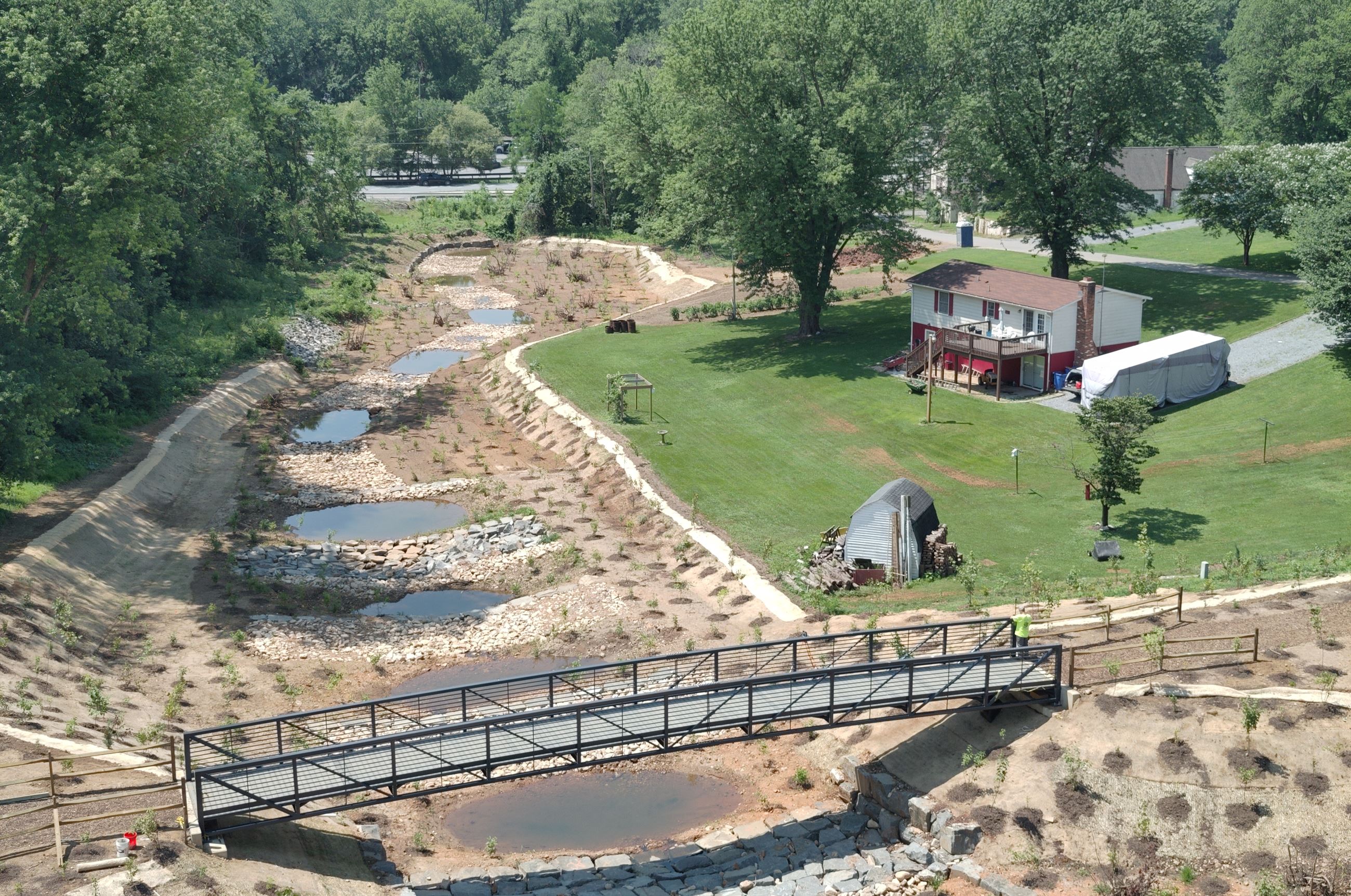
The project, which was completed in two phases, addressed environmental concerns and community needs by removing a hazardous dam located near the MARC train station, C&O Canal National Historical Park, and the Potomac River. The dam was a safety risk and caused streambank erosion and pollution.
Members of the community had historically used the dam as a path to access the train station. Phase II of the project removed the dam and replaced it with a pedestrian bridge and newly constructed walking trail. These updates provide safe and direct access from Gibbons Road to Bank Street and connect the neighborhood to the Point of Rocks Community Park.
Phase I of the project, completed in 2019, restored the stream, improved floodwater storage capacity, filtered pollutants, enhanced the riparian buffer, replaced a worn-out pedestrian bridge, and removed a flood-prone building. Since then, native trees and shrubs have flourished, signaling a successful ecological recovery.
The Maryland Department of Emergency Management and the Federal Emergency Management Agency (FEMA) collaborated with Frederick County to support the removal of the dam in Phase II, which was partially funded through FEMA’s Building Resilient Infrastructure and Communities program. Straughan Environmental, located in Columbia, Maryland, designed the plan to remove the dam and restore the stream. Bright Masonry, based in Fairfax, Virginia, served as the project’s contractor.
###
CONTACT: Hope Morris
Communications Manager
Office of Communications & Public Engagement
301-600-2590