- Home
- Government
- Divisions
- Energy and Environment
- Department of Stormwater
- Protect Our Watershed
Protect Our Watershed
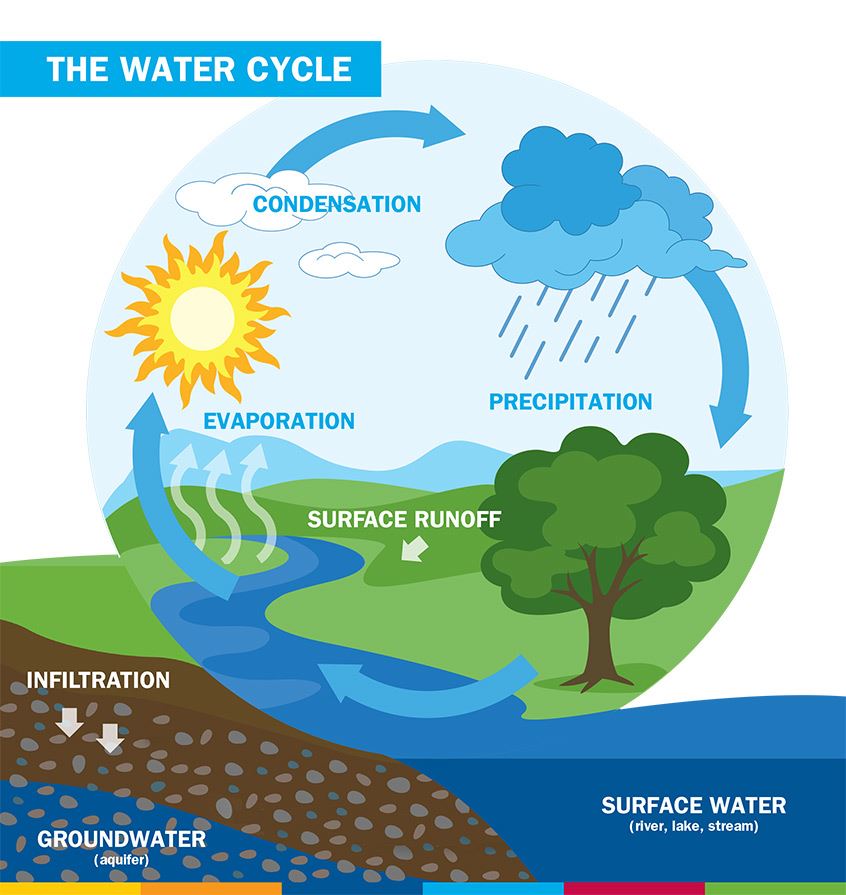
Water is a Finite Resource
Although the Earth has a large amount of water, only a small percentage of it is freshwater readily available for human use. All of the water we use for drinking, bathing, recreation, agriculture, and industry moves through the water cycle- but human activities can result in pollution and disruption of this natural process.
Water is a Shared Resource
All life on Earth is connected to and dependent on the water cycle. Actions we take at home and at work affect those who live downstream, as well as the plants and animals that need a healthy environment. The health of our local waterways depends on us being good stewards of this resource. Currently, the Chesapeake Bay ecosystem's health report card is a graded at C. So, what can we do to improve and protect our watershed?
Know Your Flow!
Learn which local watershed you live in- and what its health report card scores are! Visit: FrederickCountyMD.gov/StreamSurvey
How You Can Help
Please visit sections of our website to learn simple actions you can take that add up to a big, positive impact on our watershed.
- Know Your Flow - Learn which local watershed you live in and how we monitor its health.
- Litter Cleanups: Litter doesn't stay local. Trash blows into waterways and heads to the Bay and on to the Ocean. Sign up for a community cleanup in your area!
- Storm Drain Marking: You can help educate the community about the importance of keeping stormwater management systems clean.
- Doo Your Doody: Pet waste is a major contributor to poor water quality and aquatic habitat decline. Learn why then scoop it!
- Septic Pump-Out Rebates: A clean tank helps prevent groundwater pollution. Get $75 to help take care of yours!
- Report Pollution: Let us know if you spot spills or liquids that shouldn't be draining into storm drains and creeks.
- Plant Trees: Whether getting $25 towards a single tree, or dedicating multiple acres to our Creek ReLeaf conservation easements, every tree planted helps ensure a cleaner, healthier watershed!
A bioswale is a landscaping feature that facilitates the slowing, collecting, and filtering of stormwater in a depressed, concentrated area. They are designed to manage a large quantities of stormwater runoff from impervious surfaces, like a parking lot or street. They are generally linear systems that are greater in length than width, and are vegetated with plants that can withstand both heavy watering and drought.
Benefits of a bioswale:
- - Reduces standing water that attracts mosquitoes
- - Allows pollutants to be filtered out of the stormwater
- - Increases aesthetics by providing green space
A Rain Garden is a depressed area in the landscape that collects rain water from a roof, driveway or street, and allows it to soak into the ground. Planted with grasses and flowering perennials, rain gardens can be a cost effective and beautiful way to reduce runoff from your property. Rain gardens can also help preserving clean rainwater, creating habitat, and preventing local flooding and water pollution.
Benefits of Rain Gardens:
- - Reduce or eliminate the need to water with municipal water
- - Reduce garden maintenance
- - Reduce stormwater runoff
- - Increase natural habitat
A micro-bioretention is a filtration system that treats runoff by passing it through a filter bed mixture of sand, soil, and organic matter. A perforated pipe within the stone layer collects and directs the filtered rainwater from large storms to a storm drain system so the facility drains within 2 days. Micro-bioretention areas are often located in parking lot islands, cul-de-sac islands, or along roads.
Benefits of Micro-bioretentions:
- - Replenish groundwater supply
- - Provide wildlife habitat
- - Reduce runoff rates and volumes
- - Remove sediments and pollutants
A dry well is an underground storage facility that receives and temporarily stores stormwater runoff from roofs. The storage of this runoff allows the water to infiltrate into the surrounding soils and into the groundwater. A dry well may be either a structural chamber or an excavated pit with a gravel-like fill.
Benefits of a dry well:
- - Reduces the amount of stormwater runoff from your property
- - Reduces the amount of sediment and pollutants washed away with runoff into nearby storm drains or streams
- - Allows for groundwater recharge and supply to nearby streams facilitated by the slow release and infiltration.
Stormwater management ponds are designed to collect stormwater and slowly release it so that downstream areas are not flooded or eroded. The collection of stormwater runoff in this retention area, allows the pollutants and sediments to settle down to the bottom of the pond before they have a chance to enter into our local waterways. Depending on the type of pond, pooled water can remain permanently (wet pond) or it could all be released within 72 hours (dry pond).
Benefits of Stormwater Management Ponds:
- - Reduced flooding and erosion of adjacent streams and properties
- - Naturally processes water and traps pollutants
- - Provides wildlife habitat
Porous Pavement or permeable pavement allows rain and snowmelt to seep down to underlying layers of soil and gravel. In addition to reducing the runoff from the rain that falls on them, porous pavements can help filter out pollutants that contribute to water pollution, reduce the need for road salt, and reduce construction costs for residential and commercial development by reducing the amount of conventional drainage features.
Benefits of Porous Pavement
- - Reduces runoff
- - Recharges groundwater
- - Traps sediments and pollutants
- - Reduces the need for other stormwater best management practices